Flat roofs are a popular choice for commercial, industrial, and even some residential buildings. They’re cost-effective, offer a modern look, and create usable space for HVAC systems or rooftop amenities. But while flat roofs have their advantages, they can also be more prone to certain types of wear and damage than pitched roofs.
At Jake’s Roof Restorations, we’ve worked on hundreds of flat roofs across Pennsylvania, Maryland, Virginia, and West Virginia. Over the years, we’ve seen exactly why these roofs fail — and more importantly, how property owners can keep them performing well for decades.
Common Reasons Flat Roofs Fail
Understanding the causes of failure is the first step in preventing them. Here are the most common culprits.
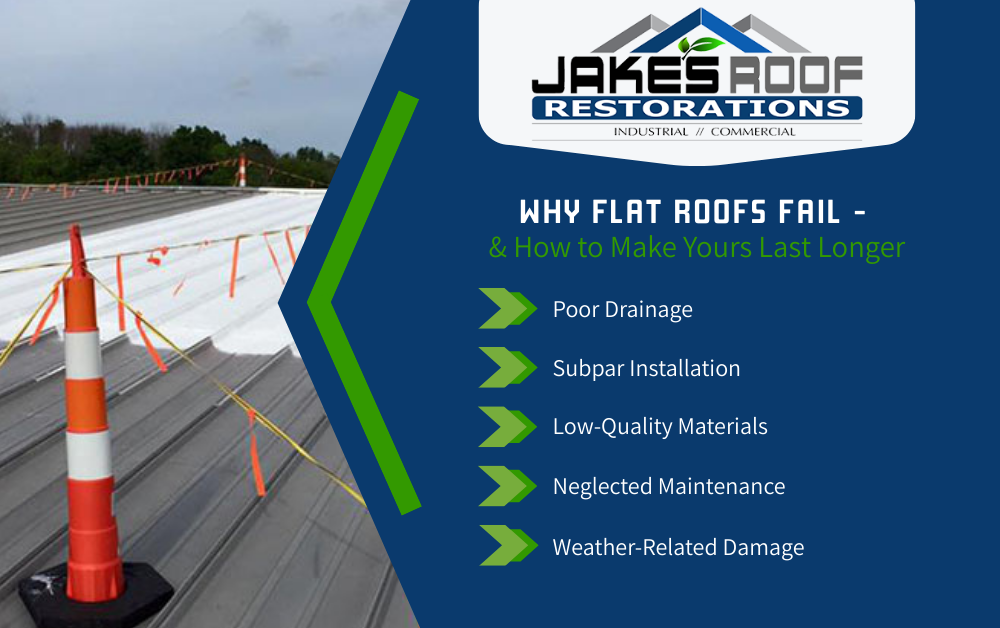
1. Poor Drainage
Flat roofs aren’t perfectly flat — they have a slight slope to direct water toward drains. When those drains are blocked or the slope is inadequate, water pooling occurs. Over time, ponding water weakens roofing materials, causes leaks, and may even compromise the structure.
Common signs of drainage issues include:
-
Persistent puddles 48 hours after rainfall
-
Debris buildup around drains
-
Water stains on ceilings or upper walls
2. Subpar Installation
A flat roof is only as good as the crew that installs it. Cutting corners, skipping manufacturer requirements, or failing to seal seams properly can mean premature failure — sometimes in just a few years.
3. Low-Quality Materials
Not all roofing materials are created equal. While budget options may save money upfront, they can lead to higher repair costs and shorter lifespans. EPDM, TPO, PVC, and built-up roofing all have their pros and cons, but quality within each type matters.
4. Neglected Maintenance
A flat roof requires regular attention. Without inspections, small issues — like a small tear or a bit of ponding — can quickly escalate into costly repairs.
5. Weather-Related Damage
Flat roofs take a beating from the elements:
-
UV exposure breaks down materials over time.
-
Freeze-thaw cycles can expand and contract seams, causing cracks.
-
High winds can lift or loosen membranes.
In the Mid-Atlantic region, all three are common threats.
How to Extend the Life of Your Flat Roof
A well-maintained flat roof can last 20–30 years. Here’s how to make that happen.
1. Schedule Regular Inspections
Have a professional inspect your roof at least twice a year — spring and fall — and after major storms. Early detection of issues is key to avoiding expensive repairs.
2. Keep Drains and Gutters Clear
Flat roofs depend on free-flowing drains. Remove leaves, dirt, and debris to prevent water pooling. A seasonal cleaning schedule is essential, especially in the fall.
3. Invest in Quality Materials
Choosing the right membrane is critical. Here’s a quick comparison:
| Material | Lifespan | Maintenance Needs | Cost per sq. ft. | Energy Efficiency |
|---|---|---|---|---|
| EPDM | 20–25 yrs | Low | $$ | Moderate |
| TPO | 15–20 yrs | Low | $$ | High |
| PVC | 20–30 yrs | Low | $$$ | High |
| Built-Up | 15–20 yrs | Moderate | $$ | Moderate |
4. Apply Protective Roof Coatings
Silicone and acrylic coatings add a watertight barrier, protect against UV damage, and can even lower energy costs by reflecting heat.
5. Address Repairs Promptly
A small tear today could be a major leak tomorrow. Quick action is the most cost-effective approach.
Maintenance Best Practices for Flat Roofs
A seasonal plan helps ensure your flat roof stays in peak condition.
Seasonal Maintenance Checklist:
-
Spring: Inspect after winter freeze-thaw damage.
-
Summer: Check for UV and heat-related wear.
-
Fall: Clear leaves and debris before winter.
-
Winter: Monitor snow load and ice buildup.
Professional Maintenance vs. DIY
While it might be tempting to send in your own maintenance crew, untrained personnel can cause accidental damage. Professional roofers know how to walk and work on flat roofs without risking tears or punctures — and they ensure work meets warranty standards.
Choosing the Right Roofing Partner
Why Experience Matters
Flat roofs require specialized skills. An experienced contractor knows how to avoid installation mistakes, select the right materials, and spot early warning signs.
What to Look For in a Roofing Contractor
-
Manufacturer certifications (e.g., Duro-Last®)
-
Proven track record with flat roofs
-
Detailed inspection process
-
Preventative maintenance offerings
When to Replace vs. Restore
Signs You Need a Replacement
-
Multiple active leaks
-
Structural damage to decking
-
Large areas of membrane deterioration
When Restoration is the Better Choice
-
Structurally sound roof deck
-
Minor or isolated damage
-
Aging surface in otherwise good condition
Protect Your Investment
Flat roofs fail for many reasons — but most can be prevented with the right care. By investing in quality installation, scheduling regular inspections, and addressing issues promptly, you can dramatically extend your roof’s lifespan.
Jake’s Roof Restorations specializes in keeping flat roofs in top condition for commercial and industrial buildings. Whether you need an inspection, maintenance plan, or restoration, we’ll ensure your roof stays strong, durable, and ready to protect your building for decades.
Call us today at (717) 360-8517 or contact us online to schedule your flat roof inspection.