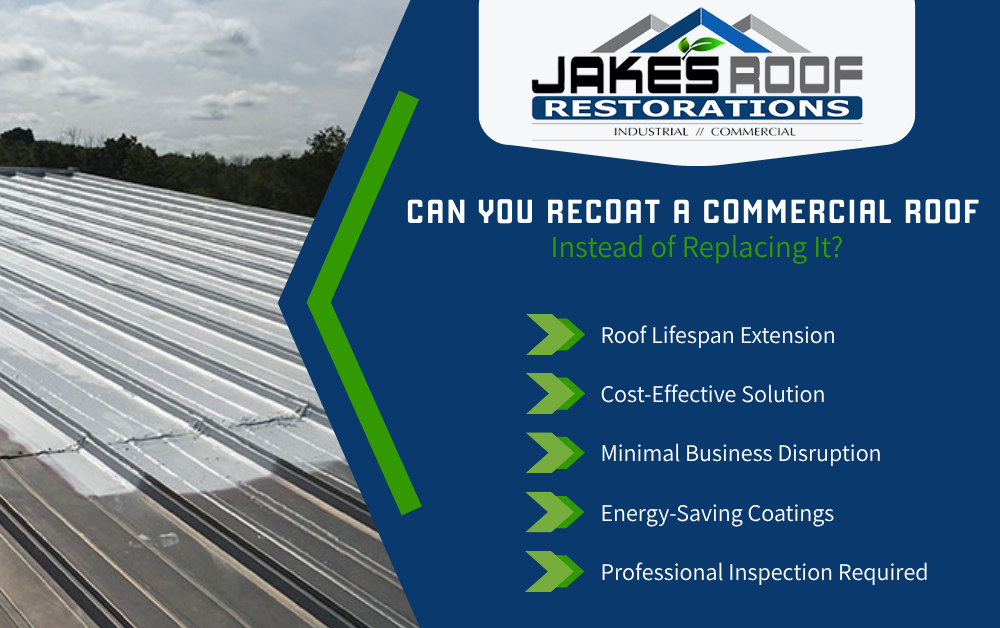
For commercial property owners and facility managers, the roof is one of the most expensive parts of a building to maintain. When leaks start forming or the material begins to show its age, many assume that a full replacement is the only option. But here’s the good news: recoating a commercial roof is often a practical, long-lasting, and far more affordable alternative to tearing everything off and starting from scratch.
In this post, we’ll explore what roof recoating involves, when it works, why it’s growing in popularity across the commercial roofing world, and how you can determine if it’s the right solution for your building.
What Is Commercial Roof Recoating?
Commercial roof recoating is the process of applying a new protective coating over an existing roof membrane. This isn’t just a patch job or a quick fix—it’s a proven method of restoring and preserving a flat or low-slope roof without tearing off the original system.
The most commonly used coating materials include:
-
Acrylic coatings – water-based, cost-effective, and UV-reflective
-
Silicone coatings – known for excellent weather resistance and ponding water tolerance
-
Polyurethane coatings – durable, high-traffic resistant options ideal for industrial settings
-
Asphalt-based coatings – less common today, but still used in certain built-up roof systems
These coatings form a seamless, watertight barrier across the roof, helping seal leaks, reflect UV rays, and extend the roof’s life by years—sometimes over a decade or more with proper maintenance.
When Is Recoating a Good Alternative to Replacement?
While roof recoating isn’t suitable for every situation, it’s a great fit for a wide range of aging commercial roofs—especially when the structural deck and membrane are still in solid condition.
Here’s when recoating is a smart alternative:
1. The Roof Is Still Structurally Sound
Recoating works best when the existing roof doesn’t have major structural issues. If there are no widespread cracks, moisture saturation, or compromised decking, recoating can provide years of additional service life.
2. The Leaks Are Minimal and Isolated
Small, manageable leaks—often around seams, penetrations, or flashings—can be fully sealed during surface prep and coating. If the leaks are significant or widespread, a deeper inspection is necessary.
3. The Insulation Is Still Dry
Wet or saturated insulation under the membrane often means a full replacement is needed. That’s why thermal imaging or moisture scans are key before recoating begins.
4. The Roof Hasn’t Been Coated Too Many Times Already
Most commercial roofs can be recoated one or two times during their lifespan. However, coatings build up thickness over time. If there’s already a thick layer in place, it might need to be removed before recoating again.
Benefits of Roof Recoating vs. Full Replacement
Choosing to recoat your commercial roof instead of replacing it offers a number of practical benefits—especially if budget, downtime, or energy efficiency are concerns.
1. Cost Savings
Recoating a commercial roof typically costs 40% to 60% less than a full tear-off and replacement. You’re not paying for demolition, debris removal, or all-new insulation and membranes—just the surface prep and coating application.
2. Minimal Business Disruption
Full roof replacements can shut down sections of your building or create safety concerns for staff and customers. Recoating is fast and far less disruptive—some projects can even be completed during regular business hours with minimal interference.
3. Extends Roof Lifespan by 10–15 Years
A professionally applied coating can extend the life of your roof by a decade or more, especially if the system is maintained. Some coatings can even be recoated again after their service life ends, giving your roof a double life cycle.
4. Energy Savings from Reflective Surfaces
Many modern roof coatings are highly reflective, meaning they bounce back UV rays and help lower interior building temperatures. That can translate into lower HVAC costs during the summer and increased indoor comfort.
5. Environmentally Friendly
Avoiding a tear-off reduces waste in landfills and supports a more sustainable approach to roofing. Some coatings are even ENERGY STAR® rated and may qualify for green building credits or tax incentives.
Common Misconceptions About Roof Coatings
Although roof coatings are widely used in commercial settings, there are still a few persistent myths that cause hesitation. Let’s clear some of them up.
1. “Recoating Is Just a Temporary Fix”
Wrong. When applied correctly and under the right conditions, roof coatings are a long-term solution. Many come with warranties ranging from 10 to 20 years, depending on the product and application thickness.
2. “They Don’t Last in Harsh Weather”
Modern coatings—especially silicone —are engineered for UV exposure, extreme heat, freezing temperatures, and ponding water. They’re used from the hot Southwest to the icy Northeast.
3. “Coatings Are Only for Flat Roofs”
While flat and low-slope roofs are the most common candidates, coatings can also be applied to metal pitched roofs, standing seam systems, and even older built-up roofing (BUR) systems with the right prep.
4. “The Roof Will Look Cheap or Unprofessional”
Coatings can actually improve the visual appeal of a roof. They create a clean, uniform, and professional finish—especially important for buildings where aesthetics matter to tenants or customers.
How to Know If Your Roof Is a Good Candidate for Recoating
Before jumping into a recoating project, it’s essential to know whether your roof qualifies. Here’s how a professional contractor will assess it:
1. Visual Inspection
They’ll look for signs of damage, tears, cracks, or areas where the membrane is pulling away from the substrate.
2. Moisture Detection
Using tools like infrared scanners or core sampling, contractors determine if any insulation or substrate layers are wet. Saturated roofs usually need repair or partial replacement before recoating.
3. Adhesion Tests
Certain coatings require adhesion testing to ensure the new material will bond properly to the existing surface. This is especially true if the roof was previously coated with a different product.
4. Drainage Evaluation
Recoating is most effective when the roof already drains properly. Areas with severe ponding may need slope adjustments, crickets, or additional drain placements before a coating can be applied.
Why Recoating Makes Business Sense
Commercial roof recoating isn’t just about saving money upfront—it’s a smart capital improvement that helps reduce long-term maintenance costs and supports smoother facility operations. Here’s why:
-
Less downtime = better tenant retention
-
Improved energy efficiency = lower operating costs
-
Fewer emergency leaks = fewer operational interruptions
-
Warranty options = predictable budgeting
For property managers overseeing multiple buildings or industrial facilities with tight margins, roof coatings provide predictability and protection without massive capital outlay.
A Smarter Alternative to Commercial Roof Replacement
Replacing a commercial roof is a major investment—and while sometimes necessary, it isn’t always the only option. If your building’s roof is in generally good shape but showing signs of aging, commercial roof recoating might be the ideal solution.
It can save you thousands, extend your roof’s life, improve energy efficiency, and avoid the headaches of a full tear-off. At Jake’s Roof Restorations, we specialize in helping business owners make smart, cost-effective decisions about their roofing systems.
Want to know if your roof needs recoated?
Schedule a free roof estimate with Jake’s Roof Restorations today. We’ll help you determine if recoating is the right move—and if so, deliver a high-performance solution that’s built to last.